

Myrtle’s Brood
After waiting over two years for a bird to choose my little nest box, I almost missed the whole thing by switching the camera off a few weeks too early.

It has been a while since I have sat myself down to write about my favourite subject - nature. I’ve had a lot of life going on, what with buying my first house and having to do a lot of painting, along with staring at empty rooms and thinking to myself, ‘how am I actually going to do this?’ The painting is now all finished, and some rooms are furnished, but it turns out building a home is a process, and I will happily take my time.
My creative side has been nestled away while I cover myself head to toe in green paint, get hit in the head with falling curtain poles, and watch my fiancé discover the delights of DIY and toolboxes. But she is feeling rather vibrant and ready to burst out, and the first thing I wish to share is a wonderful moment in my life back in May, when little Myrtle the Great Tit came into our lives.

From incubation to fledging

I purchased a nest box with a camera a few years back. I had wanted a nest box for any flying friends to use when needed, but also a camera to watch nest-building, as it’s something I have never seen in person. I excitedly drilled the box into the side of the house on the day it arrived, set up the WiFi, downloaded the app, and patiently waited to see if any friends would take up residence.
There was a Blue Tit who seemed keen, drilling her little beak off the bottom of the box, having a good look around, and coming back for a few extra visits, but in the end she decided that the bathroom vent was the place to build her nest and successfully had her brood away from my prying camera’s eyes (but with much twittering heard whenever I had a shower).
I waited over two years, but no one wanted the box. There were some keen little visits at the start of February, but then it was quiet for the rest of the time. Feeling defeated for a third year, I turned the camera off in April.
Then one day in May, sitting outside in the sunshine, I heard a sharp little alarm call behind me. I looked at the nest box and saw grass sticking out of the bottom. I said out loud, completely unhinged, “No f**kin’ way!”, and ran into the house to connect the camera. After downloading the app again and clicking far too many things on my phone in my excitement, there she was. A little Great Tit was in the box on a beautifully built nest.
Great Tits will only start incubating once they have laid all of their eggs, so I was eager to see how many she had laid, without getting too angry at myself for giving up on the camera and missing her building the nest.
After staring at my phone screen, watching this little mama bird stare directly at the wall of the nest box for a few hours, she finally got up to stretch and find herself some food.
Six eggs!
Myrtle had laid six tiny white eggs with speckles, all nestled together in her beautifully soft nest. There is something incredibly endearing about watching a bird choose a safe place to lay her eggs and sit diligently on a nest inside a boring brown box for hours on end.
The next two weeks settled into a gentle rhythm. I’d wake up and instantly check the live feed to see what Myrtle was doing and how the egg-hatching was coming along. Watching a nest is surprisingly addictive. Before long, all of my family and friends were asking the same question: “What’s Myrtle doing now?”
Incubation isn’t particularly exciting. There aren’t any grand spectacles, only patience. Myrtle sat for long stretches of time, feathers fluffed around her beautiful clutch, occasionally turning the eggs with gentle care before leaving the box for a well-earned meal and stretch. Sometimes she’d only be gone for a few minutes, and I’d spot her in the nearby trees before she returned. Other times, she’d disappear for over an hour, and that was me, worrying as though she’d never come back. But she always did, shuffling herself into the same position before settling once more.
She slept in the nest box every night too, keeping both herself and her precious eggs warm beneath her feathers.
I was out one evening celebrating my dad’s 78th birthday when, while waiting for our food, I decided to check the live feed. Sitting on top of the eggs was a tiny pink wrinkled thing. My first thought was, ‘Where’s Myrtle? Has an insect got into the nest?’
But no. Zooming in, I realised this tiny pink creature was a chick. The first egg had hatched! That was it, the birthday conversation turned to Myrtle’s eggs.
Within an hour or two, there was a second little wrinkled bundle. By early the next morning, all six eggs had hatched. Six pink, wrinkled little things with oversized heads and dark eyes still firmly closed had completely taken over the nest box, while every trace of the eggs had disappeared. (Myrtle had eaten them for the extra calcium and protein.)
Myrtle’s brood was all here, and life inside the nest box became wonderfully chaotic.
Myrtle and her other half (who naturally became known as Bog... for Bog Myrtle) barely stopped. From roughly 4:30 in the morning until 8 p.m., they arrived with an endless supply of caterpillars, flies and other insects. Tiny morsels disappeared into even tinier mouths, and one behaviour I particularly loved was watching Myrtle and Bog make sure every chick received its fair share. If one particularly greedy one managed to grab too much, they’d wrestle it back out and give it to one of the other chicks.
After only a few days, the chicks’ eyes had darkened, little rows of feathers began appearing beneath their skin, and their eyes slowly started to open. Six wide yellow mouths greeted every returning parent - little paranhas.
One behaviour I witnessed and found absolutely fascinating was nest housekeeping. Sometimes when a parent arrived, these little pink wrinkled things would somehow manage to flip themselves upside down and produce a faecal sac (bird nappy, really). Myrtle would immediately collect it and carry it away from the nest. Occasionally, she’d drop it, and you better believe she pushed every one of those babies aside and dug around until she’d found it again. It turns out Great Tits are incredible clean freaks when it comes to raising a family.
I checked the camera constantly. I couldn’t stop watching them grow. Then one morning, I looked at the live feed and genuinely thought, “... what happened to you lot overnight?!”
Gone were six tiny pink blobs. Instead, six young Great Tits filled almost every inch of the box, patiently waiting for Myrtle and Bog to arrive with yet another mouthful of food. They huddled together for warmth, flapped half-grown wings into each other’s faces, and flipped upside down with remarkable regularity.
Whenever the weather turned cold or wet, Myrtle would still squeeze herself into the box and sit on top of the chicks as best she could to keep them warm. Eventually, though, they became far too large to fit beneath her feathers, and she began spending her nights roosting in the nearby trees instead.
Before long, the chicks were constantly stretching and flapping their wings, usually giving a sibling an accidental slap around the face in the process. I knew the fledgling day was close. Great Tits usually leave the nest around three weeks after hatching - I’d marked it in my calendar…
Late one evening, after eight o’clock, the chicks decided it was time. There was lots of hesitation, plenty of excited chattering, endless peering through the tiny entrance hole, and some Spider-Man-esque clinging to the inside walls of the box. And of course, I missed the start of the show, but thankfully, the camera feed caches video!
It took them around twenty minutes, but one by one, five of the chicks finally took flight. One little chick lingered behind. It spent one final night huddled in the top left-hand corner of the nest box. Maybe it wanted one night of peace, or maybe it just wasn’t quite ready to go into the world.
By five o’clock the following morning, though, the last little one gathered its courage and flew into the world to join its siblings.
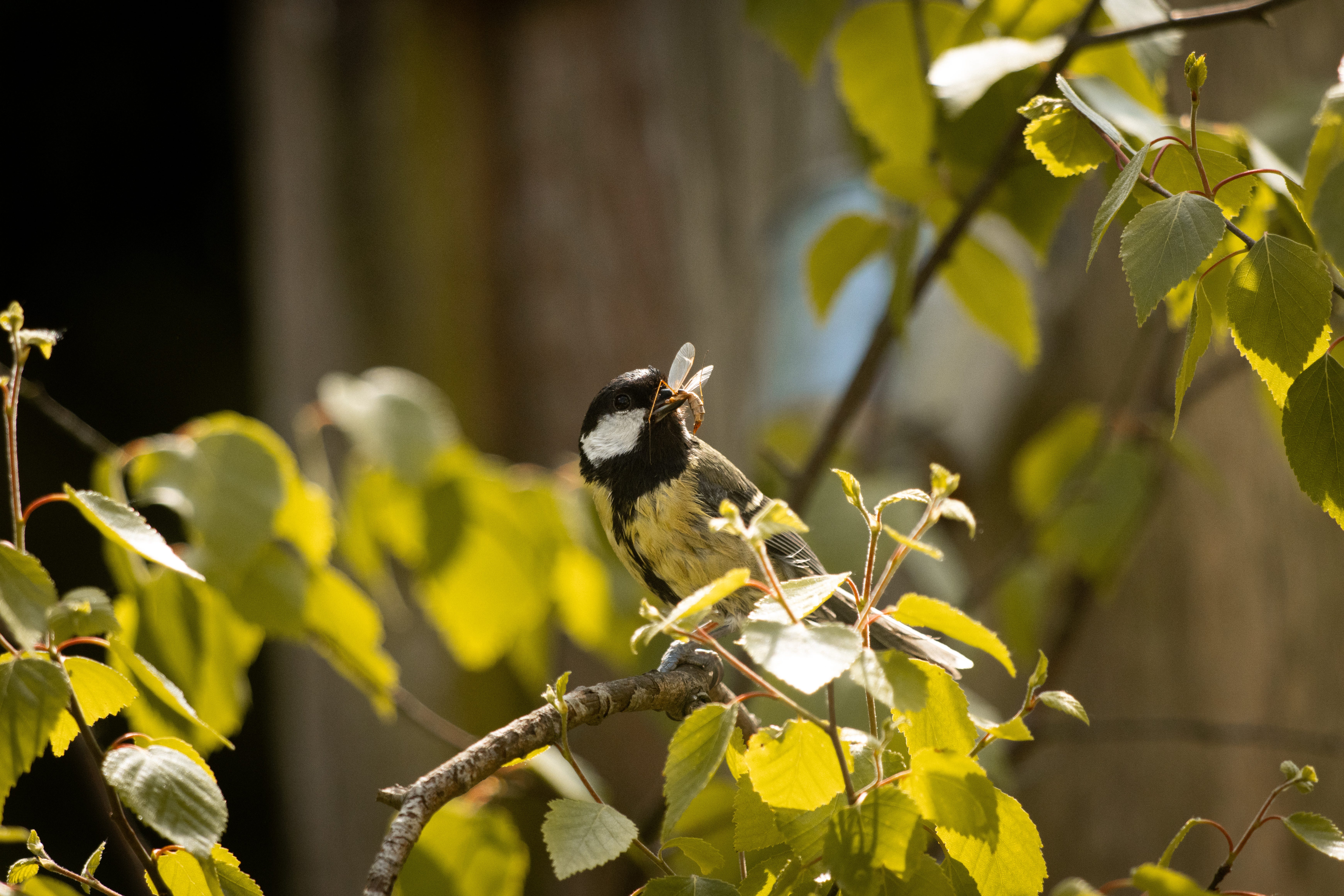
And just like that, the nest box was silent.
For weeks, it had been filled with hungry paranhas, fluttering wings and the constant comings and goings of Bog and Myrtle.
I know six eggs successfully becoming six fledglings is exactly how the story should end, but I can’t help missing the little family.
I am so grateful that I got to watch Myrtle be such an incredible mum and raise six healthy fledglings, all of which I have since seen in the woods behind the house. In the first few weeks, I saw them following Myrtle around, chattering away as though she was expected to feed them forever.
After waiting over two years for someone to choose my little nest box, I almost missed the whole thing by switching the camera off a few weeks too early.
It is one of the greatest wildlife experiences I have ever had, and a wonderful reminder that extraordinary moments can happen inside the plainest little brown box attached to the side of a house.
Consider purchasing a nest box and leaving it somewhere safe in your garden for any little birds looking for shelter or to nest.
Take care,
Rebecca
